Bluebonnet Season: Texas in Full Bloom
Photographs of Tiffany Dimaano, on location in Washington County, Texas.
There is a moment each spring when Texas undergoes a quiet transformation. Almost overnight — somewhere between the last frost and the first real warmth of March — the roadsides and open fields of Washington County turn a deep, saturated blue. The bluebonnets have arrived. And with them, for a window of perhaps three weeks, the Texas landscape becomes something genuinely extraordinary.
The bluebonnet has been the official state flower of Texas since 1901, but no official designation can quite prepare you for the first time you see them in full bloom. These are not garden flowers arranged in tidy beds. They grow in wild, abundant sweeps — across pastures, along highway shoulders, up hillsides and down into creek valleys — in a blue so vivid it reads almost electric against the spring green of the surrounding grass.
Brenham: The Heart of Bluebonnet Country
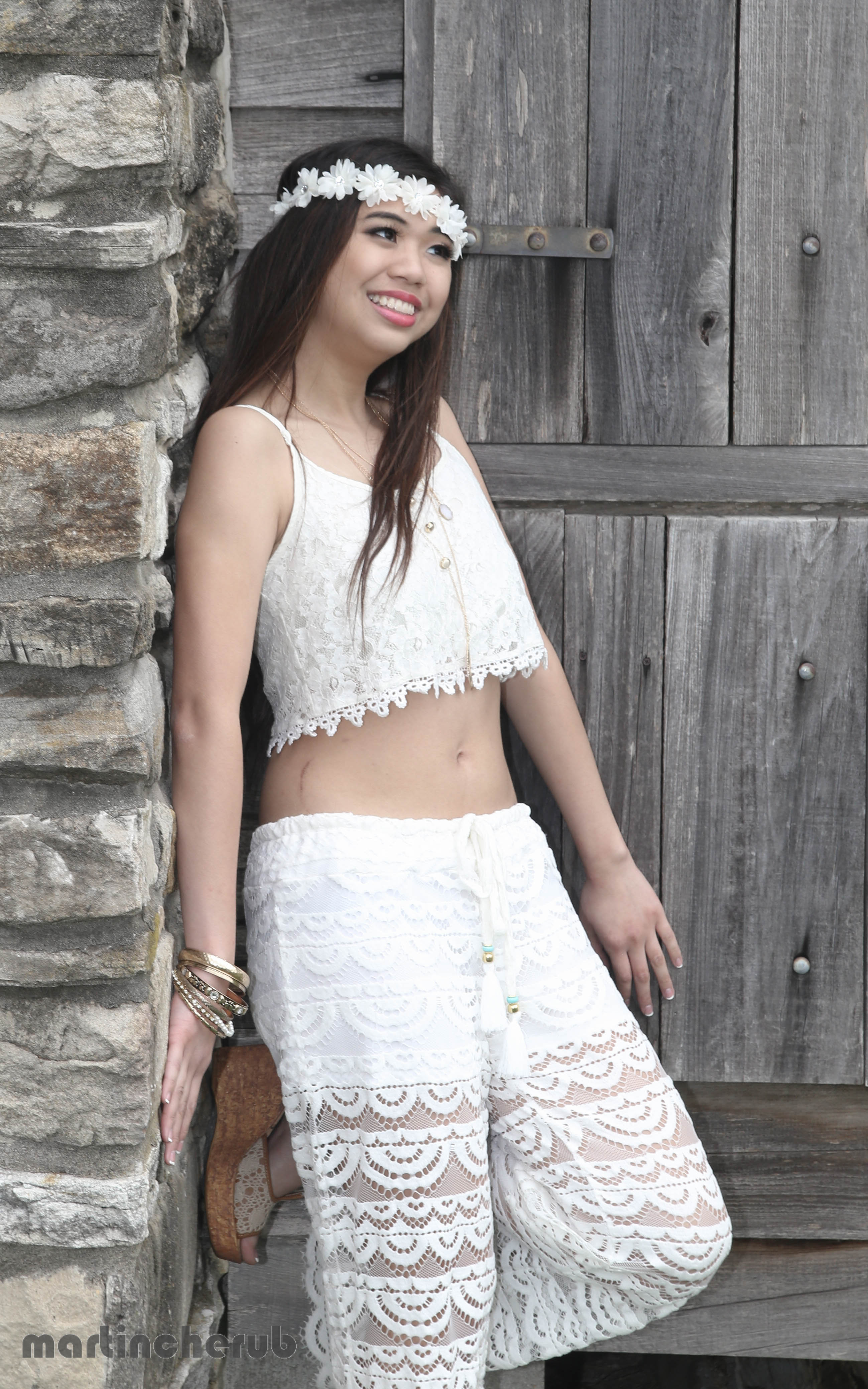
Positioned roughly midway between Houston and Austin along Highway 290, the small town of Brenham sits at the centre of Washington County — the most celebrated bluebonnet destination in the state. The surrounding countryside is the Texas of the imagination: rolling hills, weathered farmsteads, split-rail fences, and wide open skies that seem to go on indefinitely.
It is a landscape that rewards slow travel. The best approach is not to plan too precisely, but to drive the backroads and let the fields reveal themselves. A particularly vivid patch will appear around a bend, and you’ll find yourself pulling over before you’ve made a conscious decision to do so.
The Season in Bloom
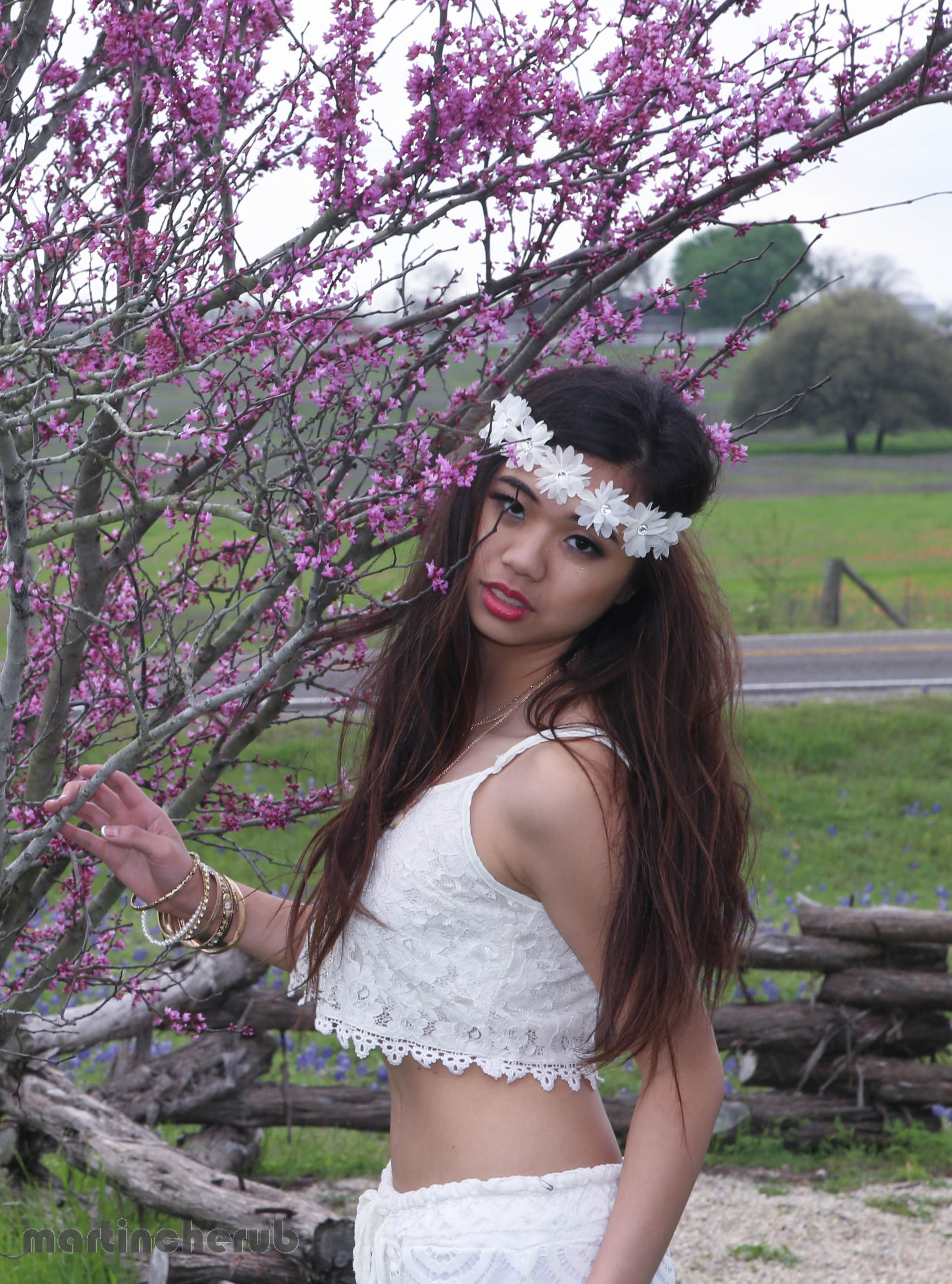
What makes the bluebonnet season especially striking is that it doesn’t arrive alone. The Texas redbud trees bloom in tandem — their clusters of vivid pink blossoms opening at the same moment, creating a counterpoint of warm colour against the cool blue below. Pink and blue together, set against new spring green, is a combination painters have spent careers chasing. Here, it shows up annually.
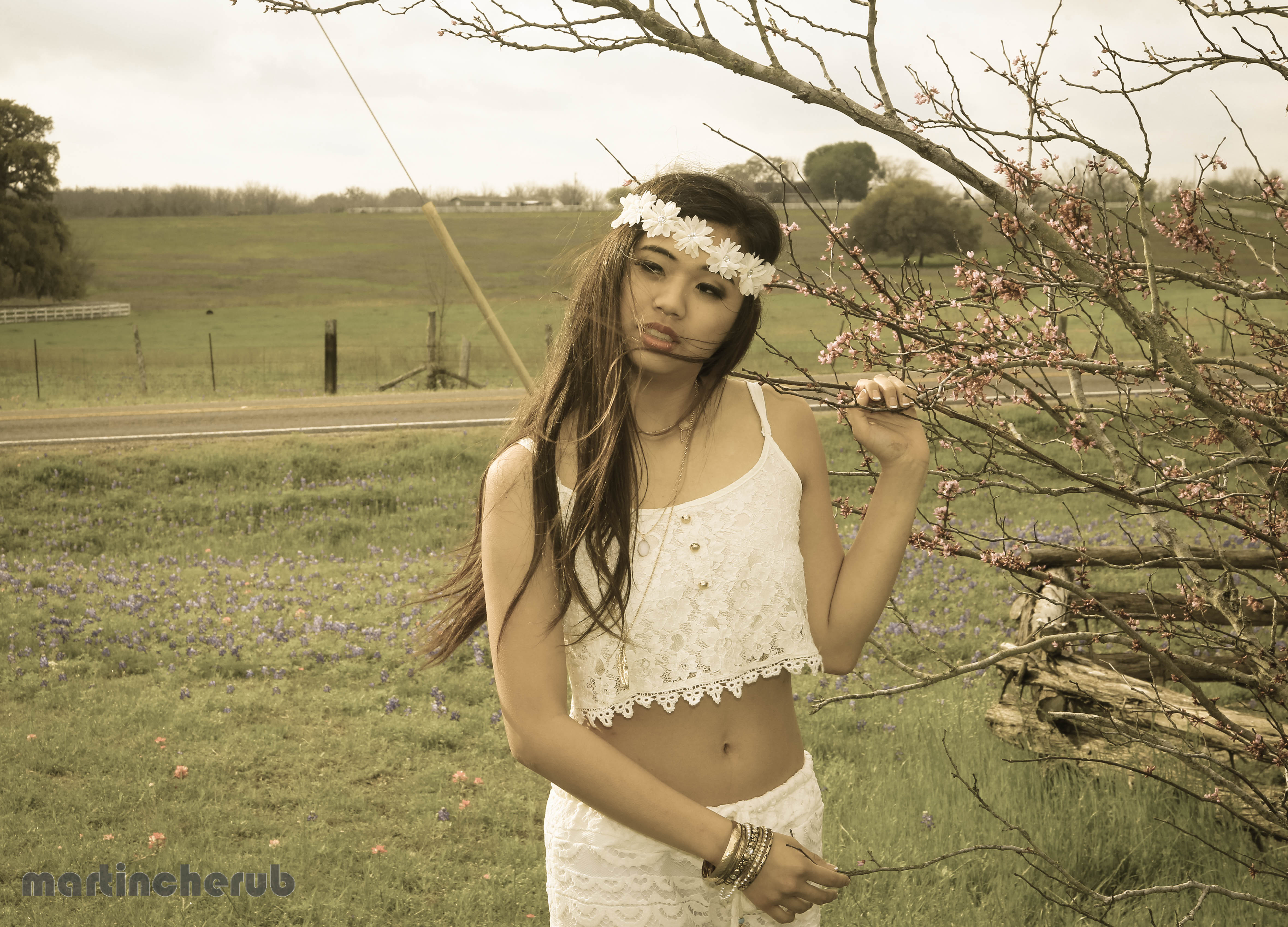
The light in late March has a quality that the harsher months don’t offer — soft and diffused, without the overhead glare of a Texas summer. It falls evenly across the fields, flattering the flowers and everything within them.
The Fields Themselves
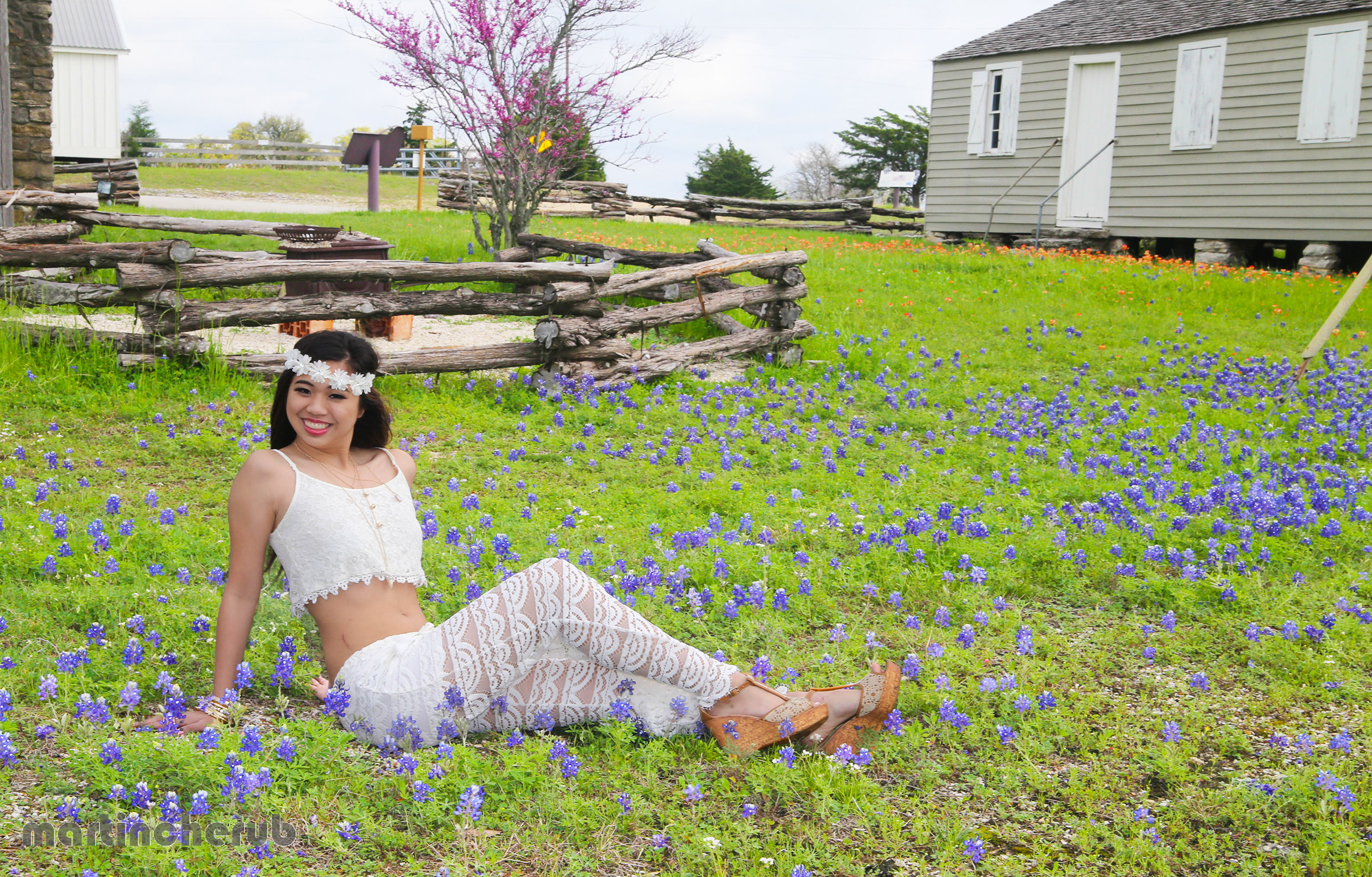
The farmhouses and historic structures that dot this part of Washington County add a particular character to the landscape. Weathered timber, stone foundations, and hand-built fences — built to last by people who understood this land — now stand quietly among the wildflowers, as if the fields have slowly been reclaiming the space around them.
To sit in the middle of a bluebonnet field is a specific kind of experience. At ground level, the flowers surround you entirely — their faint honey-and-vanilla fragrance in the air, the hum of bees working through the blooms, the sense that you’ve stepped into something seasonal and irreplaceable.

A note for visitors: many of the most photogenic fields are on private land. Stay close to the roadside or seek permission, and walk gently — bluebonnets are fragile, and a trampled patch takes a long time to recover. Watch for fire ants and the occasional snake. Texans take this etiquette seriously.
Indian Paintbrushes: The Supporting Act
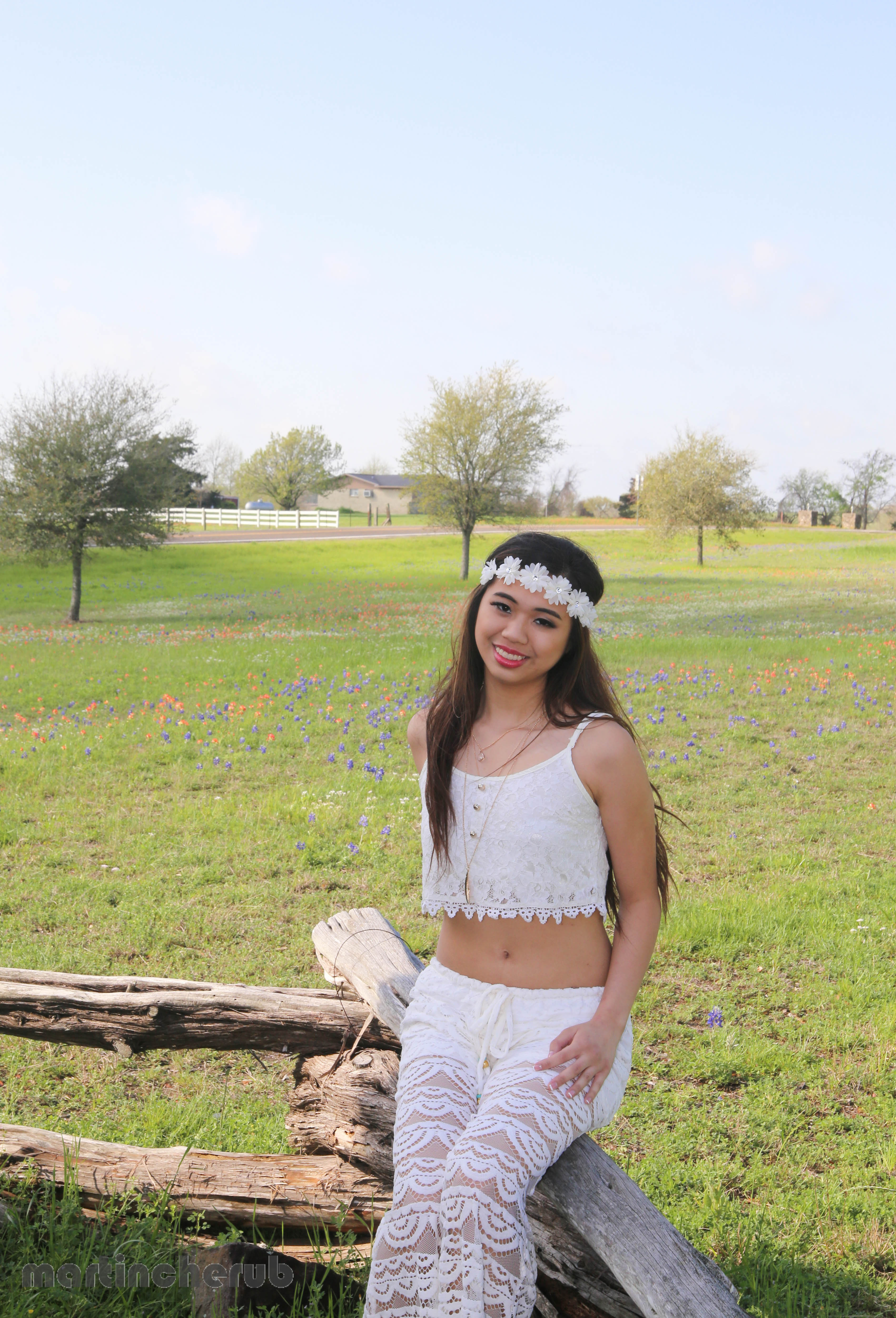
Throughout the fields, vivid red Indian paintbrushes grow alongside the bluebonnets — a wildflower pairing that feels almost too deliberate to be natural. The red and blue together, across a wide open pasture, is the quintessential Texas spring image. It is also, frankly, the reason so many Texans make this drive every year without needing to be persuaded.
A Landscape Made for the Camera
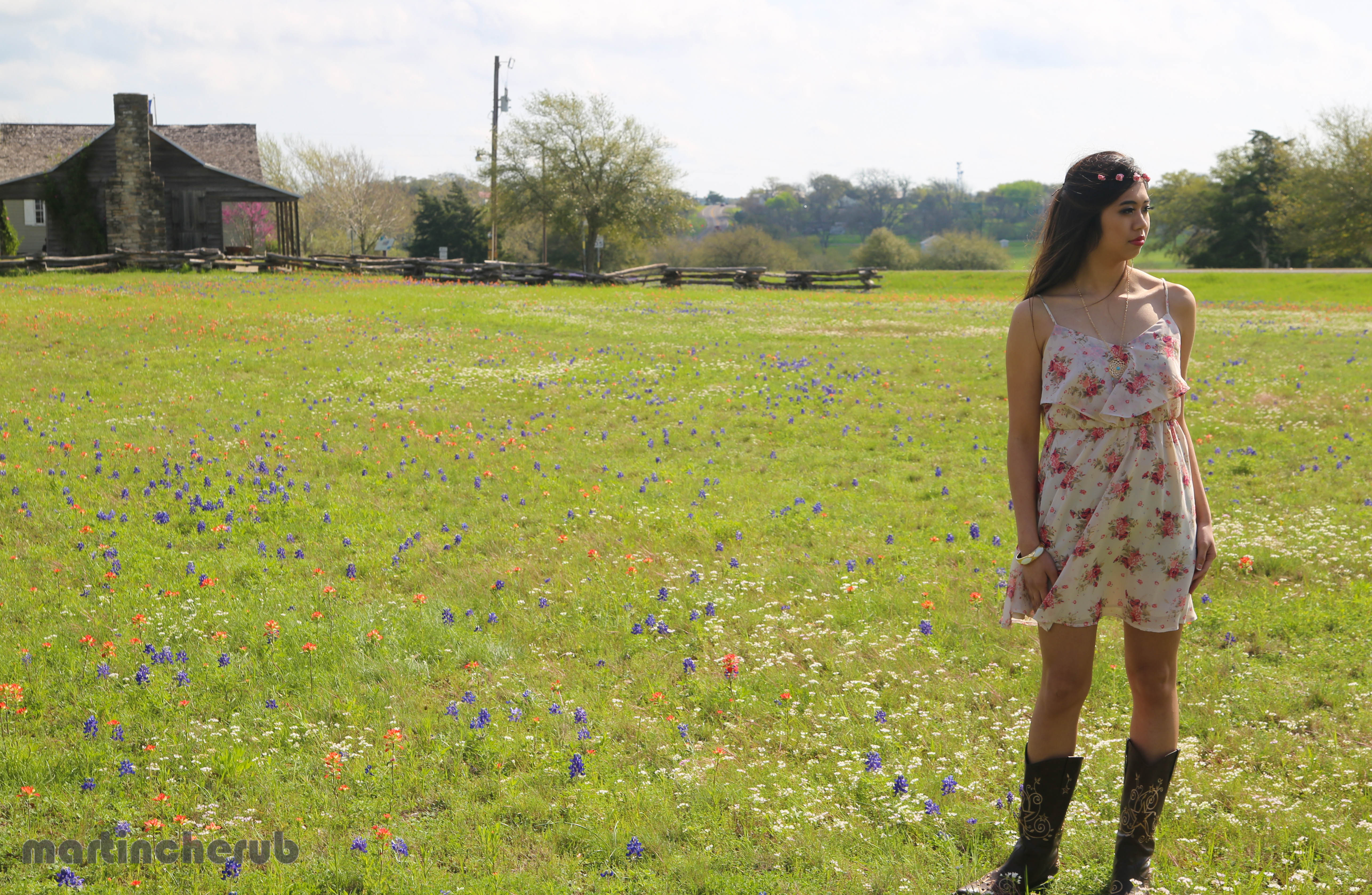
The tradition of photographing family and friends among the bluebonnets is as Texan as the flowers themselves. A few practical notes for anyone bringing a camera:
- Time it early or late. The first hour after sunrise and the last hour before sunset give you that warm, raking light that makes the blue read deepest. Midday sun flattens everything.
- Get low. A camera held at chest height records a field of flowers as a distant pattern. Drop to ground level — phone or full-frame, it doesn’t matter — and the bluebonnets become an immersive foreground.
- Use the structures. A weathered farmhouse, a split-rail fence, a redbud in bloom. The landscape rewards images with depth, not just endless blue carpet.
- Don’t pose, occupy. The strongest portraits are the ones where the subject simply settles into the scene rather than standing rigidly in front of it.
The location does most of the work. The trick is showing up at the right time — and doing it justice.
After the Fields
A bluebonnet drive is almost always paired with a stop at Blue Bell Creameries, the iconic Texas ice cream maker founded in Brenham in 1907 and still headquartered here. The factory tour and Country Store are easy crowd-pleasers — a scoop of Homemade Vanilla after a long afternoon in the fields is a tradition unto itself.
The town itself is worth a wander. Downtown Brenham has well-preserved 19th-century buildings, antique shops, a small but well-curated arts scene, and the kind of unhurried Main Street life that has become rare in Texas’s larger cities.
Planning Your Visit
Bluebonnet season along the Highway 290 corridor is brief and weather-dependent, typically running from mid-March through mid-April. An unusually cold or dry winter can shift the timing, and a late freeze can shorten the window dramatically. The Texas Department of Transportation publishes wildflower updates, and Brenham’s local tourism office tracks peak bloom in real time.
The most straightforward approach: drive Highway 290 west from Houston toward Brenham, watch the roadsides, and stop when you find a field that calls to you. Admission is free. The season does the rest.
Getting there: Brenham is approximately 75 miles west of Houston along Highway 290 — about a 90-minute drive in normal traffic. Peak bluebonnet season runs late March to mid-April, depending on the winter.